Olódùmarè: Creator of Peace, Love & Bliss

Updated: Sep 6
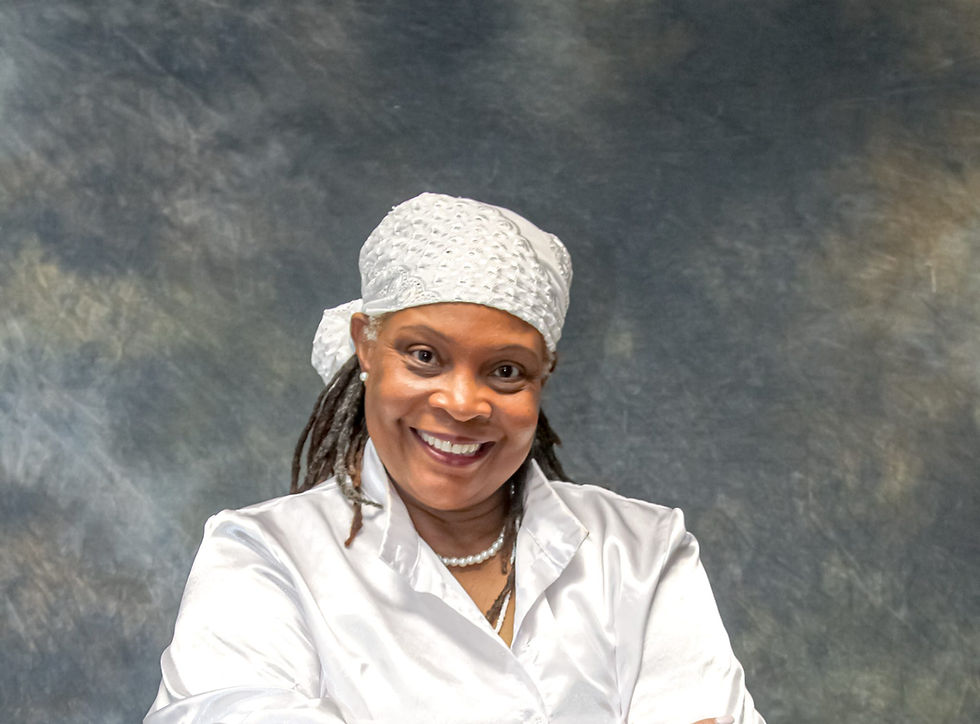
By Olóyè Adéyẹlá Bennett
Ìyalájé Ọbàtálá ni Ifè
In the cosmological system of the ancient Yorùbá Empire in present day southwest Nigeria -- and now in the global Yorùbá dispersion -- Olódùmarè is the silent, unseen and ever-present Supreme One. Olódùmarè is the Author of Peace, Love and Bliss.
Olódùmarè requires no worship.
No praise.
The Essence of Olódùmarè can only be experienced by Living with Divine Love. In Yorùbá, this quality is called Ìwà Pẹlẹ́, Divine Character.
Olódùmarè is too vast to comprehend and describe completely. In this excerpt from my upcoming book, I offer my humble experience with Olódùmarè, also spelled Èdùmàrè, our Creator, as follows:
Etymology of Olódùmarè
Odù Ifá, The Word of Olódùmarè
The Globalization of Ifá Spirituality
How to Experience the Peace of Olódùmarè
My intention is to inspire all of us to invoke Olódùmarè's Eternal Peace, Love and Bliss for the salvation of our individual selves, families, communities and, ultimately, Mother Earth.
Etymology of Olódùmarè
Olódùmarè is perfect. And patient. Olódùmarè has no form. No race. No nationality. No religion.
Olódùmarè transcends our Time.
The One, Olódùmarè, is neither female nor male, yet has both "masculine" and "feminine" attributes.
Dr. Sophie Bosede Oluwole, the late Nigerian professor and philosopher, contended that the Yorùbá people of southwestern Nigeria have a singular Supreme Being, Olódùmarè. Despite the reputation for having many gods, Dr. Oluwole said the Yorùbá people have only one Creator.

Dr. Oluwole deciphered the etymology of the word, Olódùmarè, as follows:
Olú: The Owner
Ọ̀dù: The Pot or Cauldon (Universe)
Máré: Always Full (Never Exhausted)
In English, Olódùmarè can then be defined as The All-Sufficient Owner of the Container of Goodness that is Always Full.
You may ask: "Full of what?" Olódùmarè is the The Owner of the Container that is Always Full of Virtues, such as Beauty, Bliss, Compassion, Justice, Love, Light, Knowledge, Peace, Power, Purity, Understanding, Wealth and Wisdom.
Odù Ifá, The Word of Olódùmarè
Yorùbá people generally learn spiritual concepts through Odù Ifá, or The Word of Olódùmarè. There are 256 books in the holy Odù Ifá literary corpus.
Ifá holds all the knowledge in the Universe, including:
Cosmology and the Environment
Ancestry, Family Life and Relationships
Spirituality (including all global religions traditions)
Health
Economics
Governance
Dr. Oluwo Solagbade Popoola, President of the International Council for Ifa Religion, teaches that Ọ̀sà Alásùwàdà, which is book number 160 in the holy Odù Ifá literary corpus, tells the story of the Ever Becoming process that creates Life as we know it.

Odù Ifá is aligned with Nature-based Science and Mathematics. In fact, scientists should use Odù Ifá to better understand Life.
Ọ̀sà Alásùwàdà says there was a Time Before Our Time. Only our Primordial Mothers, Eléfué, existed. There was No-Thing. No Water. No Gases. No Humans, Animals or Plants.
Out of this No-Thingness, Eléfué birthed Ayé Àkàmárà Ọmọ Eléfué, or Universal Consciousness. Scientists refer to the birth of Ayé Àkàmárà Ọmọ Eléfué as the Big Bang.
The National Aeronautics and Space Association's WMAP spacecraft dates Our Universe at 13.8 billion years when the Big Bang occured.
NASA dates our Sun at 10 billion years, with half of its lifespan left. Dr. Clair Patterson is the geochemist who dated the age of Planet Earth at 4.6 billion years. In Yorùbá, Earth is called Àyé.
The Smithsonian Museum of Natural History dates Hominins as first emerging about 6 million years ago. So, it is clear, humans are the babies of the Universe.
Let me share how Ayé Àkàmárà Ọmọ Eléfué, Universal Consciousness, was born out of No-Thingness. First, we must agree that Zero is the most powerful number.
Awon Babaláwo, Fathers of Secrets, and awon Ìyánífá, or Mothers of Ifá, write Ifá "letters" from right to left.
The numeral 0 visually represents Nothingness. Rest. Silence. The Womb.
From this place of Nothingness we can create Everything. So, add any number in front of 0 to multiply or expand its quantity. The more Nothingness you add, the larger the number becomes: 0, 20, 300, 4,000, 50,000, 600,000, 7000,000,000, 8000,000,000, 9,000,000,000,000, and so on and so on.
Àyé, our Mother Earth, was initially a watery, marshy terrain. She willed a Divinity to bring diversity to her domain.
Olódùmarè created the modern human species, Ènìyàn, in its perfect image of Light, Love, Infinity, Peace and Purity. This was about 2.5 million years ago in Ilé Ifẹ́, the Home of Love.
Olódùmarè breathes Èmí into each human being to give life or soul to each body, called Ara. Olódùmarè then imbues each human with Orí, or individual destiny. We are all interconnected because we all come from the same Creator.
Do you understand me? You and I have the same essential qualities as Our Creator: Light, Love, Infinity and Peace. We have the Power to Create a World of Peace and Love.
Olódùmarè destroyed the first beings on Àyé, or Earth, by flooding, because the original species misused their spiritual powers. A few of them survived the flooding and continue to roam the Earth plane until today.
Humanity is currently on the path of self-destruction. Fortunately, we can correct that destiny by living in harmony with all life forms on this planet, including Àyé, the Earth itself, other humans, plants, stars, animals, the oceans, rivers, mountains, valleys and minerals.
Odù Ifá Ìwòrì Méjì teaches that spiritual and material balance can heal this broken world:
Ifá ní l’ágbà tí ńgbayé
Ifa is the authority that repairs the world.
The Globalization of Ifá Spirituality
Olódùmarè is The Source of Everything in our Universe, including all global faiths.
With zero proselytization, the Yoruba spiritual practice is now global. This is due in large part to the 15th to 19th centuries Transatlantic Slave Trade. Between 1780 and 1850 alone, more than 1.12 million Yorùbá women, men and children were forceably kidnapped from their communities and brutally enslaved in the Caribbean, Central and South America, and the United States.
The Yorùbá spiritual practice is called by the following terms in the diaspora:
Brazil: Candomble
Cuba, Argentina, Venezuela: Lucumi or Santeria
Trinidad and Tobago: Shango Baptist
The United States, Europe and elsewhere: Ifa Orisha
Nigeria and elsewhere: Ìṣẹ̀ṣẹ
While there are some 200 million Yorùbá people around the globe, Christianity and Islam have taken a stronghold among the Yorùbá people in Nigeria. Between 1842 and 1843, missionaries arrived in Abeokuta, Nigeria, and began the colonialization process through Christianization.
Today, nearly half of Yorùbá in Nigeria identify as Christians, while another half identify as Muslims. Fortunately, the culture, that is, the language, manners, dress and food remain distinctly Yorùbá.
Traditionalists, or Ọ̀niṣẹṣẹ, are in the minority in Nigeria. "Traditionalists" refers to those who solely practice Yorùbá spiritual traditions -- neither Christianity nor Islam. Ọ̀niṣẹṣẹ the world over often practice their faith quietly or privately, given the social, political and financial dominance of the Abrahamic or Ibrahimic faiths.
Because of the influence of the Abrahamic faiths, modern Yorùbá people are using concepts to define Olódùmarè that are not necessarily consistent with African tradition. This originated with Bishop Samuel Ajayi Crowther, a Yorùbá linguist and the first African bishop in the Anglican Church. Bishop Crowther used the name Olódùmarè to represent Jehovah when he translated the Bible into the Yorùbá language. However, let us be clear: Olódùmarè is not uniquely the God of Abraham, Isaac and Jacob.

In their wisdom, enslaved Yorùbá leaders in Argentina, Brazil, Cuba, Mexico, Venezuela and elsewhere in the diaspora syncretized their spirituality with Catholicism. In Trinidad and Tobago, enslaved -- and free -- Africans from Ọyọ̀, Nigeria, intertwined their faith with the dominant Baptist denomination.
Religious and cultural syncretism made it possible for enslaved Yorùbá ancestors to survive at a time when African names, languages and spirituality were feared, considered barbaric and outlawed. Even our natural hair texture continue to invoke fear in the minds of non-Africans.
Yorùbá people respect all religions, all nationalities, all races and ethnicities. All humanity. This is scientific because Olódùmarè, Our Maker, created everyone and everything on Earth.
In his books, IFA: An Exposition of IFA Literary Corpus and Ifa Will Heal Our Broken World, Yorùbá scholar Chief (Dr.) Wande Abimbola, the Àwísẹ́ Àgbáyé, or Spokesperson for Ifa in the World, said all of us are Olódùmarè's children. Dr. Abimbola; therefore, encourages interfaith dialogue about strategies to heal humanity and the planet.

How to Experience the Peace of Olódùmarè
It is Olódùmarè whom we greet first thing in the morning and last thing at night.
Respectfully kneel and put your Orí, or Head, to the ground to greet Olódùmarè.
Hold your Orí between your two hands, and chant:
Mọ̀júbà Olódùmarè
I give reverence to the Creator of all Life
Ẹ̀sẹ́ùn Olódùmarè
Thank you Owner of the Universe
Mọ̀júbà Yẹyẹ
I give reverence to My Mother
Mọ̀júbà Bàbá
I give reverence to My Father
After the morning and evening greetings, one can then make Ìwúre, or Manifestations, to Olódùmarè.
Ìwúre to Olódùmarè can be made anytime.
Anywhere.
In any language.
There is no shrine or temple to Olódùmarè. You are the shrine. I am the shrine.
You can easily experience Olódùmarè's presence by silently sitting still in the early morning hours. Preferably, in Nature: In the woods, in the garden, at the seaside, at the river, in the mountains, or under the sky in your front yard.
And breathe!
The most effective way to receive Olódùmarè's blessings is by living with Ìwà Pẹlẹ́, or Gentle Character. Living with Ìwà Pẹlẹ́ is a simple process; however, humans complicate it by our desire to be right. To be first. To win. To be the smartest, or the most beautiful, or the richest. So, we must have faith that Olódùmarè will protect our best interest when we are humble enough to patiently sit back in divine silence.
Odù Ifá Ògbè Yọ̀nú teaches us thow to have Ìwà Pẹlẹ́:
Sùúrù ni Yẹyẹ Ìwà
Patience is the Mother of Character.
Empowering your Orí, or Spiritual Head, by living with Ìwà Pẹlẹ́ positively influences others to also have Gentle Character. Creating ripples of peace, love and bliss on Earth.

Odù Ifá Ọ̀sà Alásùwàdà says:
If one Ori is blessed
It extends to 200 others
My Ori that is blessed
Has affected you positively
Your Ori that is blessed
Has equally affected me positively
If one Ori is blessed
It will affect 200 others.
I extend to you Olódùmarè's blessings of Peace and Love.
In my next article, I will expand on the Creation of Humans in Ile-Ife, Nigeria, The Cradle of Civilization.
The author is Oloye Iyalaje Adeyela Bennett, a traditional Yorùbá Chief enstooled at the Obatala Temple in Ilé Ifẹ́, Nigeria, in July 1999 at the recommendation of The Apena of Ife Chief (Dr.) Omotoso Eluyemi. On that same sojourn to The Source of Civilization, Chief Eluyemi led her initiation into the Priesthood of Ifa-Orunmila. Likewise, Chief Eluyemi initiated her into the Priesthood of Obatala on February 19, 1996. She is the author of Only the Strong Survive: A Womanist Journey. Born Sharon Albury, the author hails from The Bahamas, and lives in Montgomery, Alabama. As a sacred Mother of Twins, she is also known as Ìyá Ìbejì. Please contact the author at info@womanistjourney.com.


Comments